Small Group Training vs Group Fitness
March 20, 2026
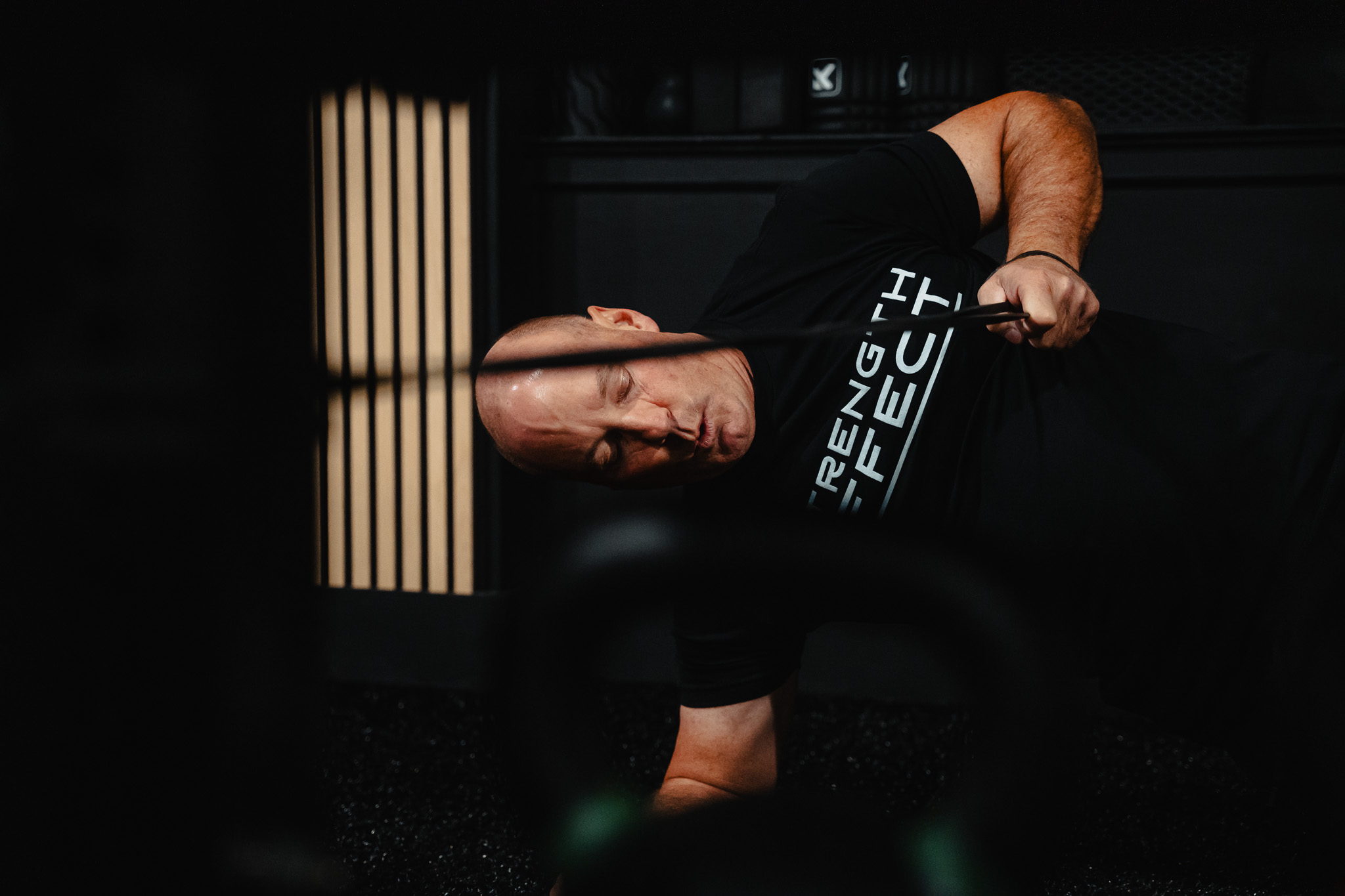
From the doorway, small group training and group fitness look similar — a few people, a coach, weights moving. They are not the same thing. Group fitness is one workout delivered to a crowd. Small group training at Strength Affect is your own program, coached in a room of no more than four. That difference decides whether you're just working out — or actually progressing.
What is the difference between small group training and group fitness?
Group fitness is a class: one instructor, one workout, and everyone does it regardless of their body, history, or goals. Small group training is individual training that happens alongside a few other people: no more than four per session, each person on their own program, with their own modifications, their own numbers tracked, and a coach who knows exactly what they're working on. One model is built for energy. The other is built for progress.
How many people are in a small group session?
At Strength Affect, never more than four. That number isn't arbitrary — it's the ceiling at which a coach can still watch every rep, cue in real time, and adjust loads set by set. A class of 15 to 25 with one instructor and a microphone can't do any of that. Four people, one coach: every rep gets seen.
Do you follow your own program?
Yes — and it's modified for your body, not just scaled up or down. Your program is built from your assessment: your movement, your strength, your injury history. If your shoulder doesn't love overhead pressing yet, your pressing looks different than the person next to you. If your squat needs a different starting point, it gets one. The room shares a coach and an hour. It doesn't share a workout.
Is your progress actually tracked?
Every session. Weights, sets, reps, and movement quality get recorded, so each week builds on the last on purpose — that's what progressive overload actually means. In a drop-in class, every visit is a standalone workout with no memory of the one before it. Without tracking, your body has no reason to change. With it, progress stops being a feeling and becomes a fact.
Does the coach actually know you?
Your coach knows your name, your training history, what you lifted last session, and what you're building toward this month. That relationship is the quiet engine of the whole model — it's why form breaks get caught early, why plateaus get solved instead of ignored, and why people stay consistent for years instead of weeks. Nobody coaching a crowd of twenty can know twenty people that way.
Which one should you choose?
If what you want is energy, music, and a sweat, group fitness delivers that — honestly. But if you want to get measurably stronger, move better, and train around a real body with a real history, you need a program, a coach who sees your reps, and numbers that prove it's working. Your program. Your coach. Your progress — with three other people in the room chasing theirs.
Frequently Asked Questions
Is small group training good for beginners?
Yes — because the program is built from your assessment, not a class template. You start exactly where you are, and your coach progresses you from there. Every client at Strength Affect starts with a free intro and an onramp before joining the group floor.
Is small group training as effective as one-on-one personal training?
The training itself works the same way: your own program, coached and progressed. One-on-one gives you the coach's undivided hour; small group shares that attention across four people at a lower investment. Many clients do both at different points.
How do I get started?
Book a free intro: a full movement assessment, an InBody scan, and a straight answer on whether we're the right fit — before you commit to anything.
Book your free intro session and feel the difference a room of four makes.
Serving Northfield, Winnetka, Glencoe, Glenview, and Wilmette.


