Why Movement Quality Matters for Getting Stronger
March 22, 2026
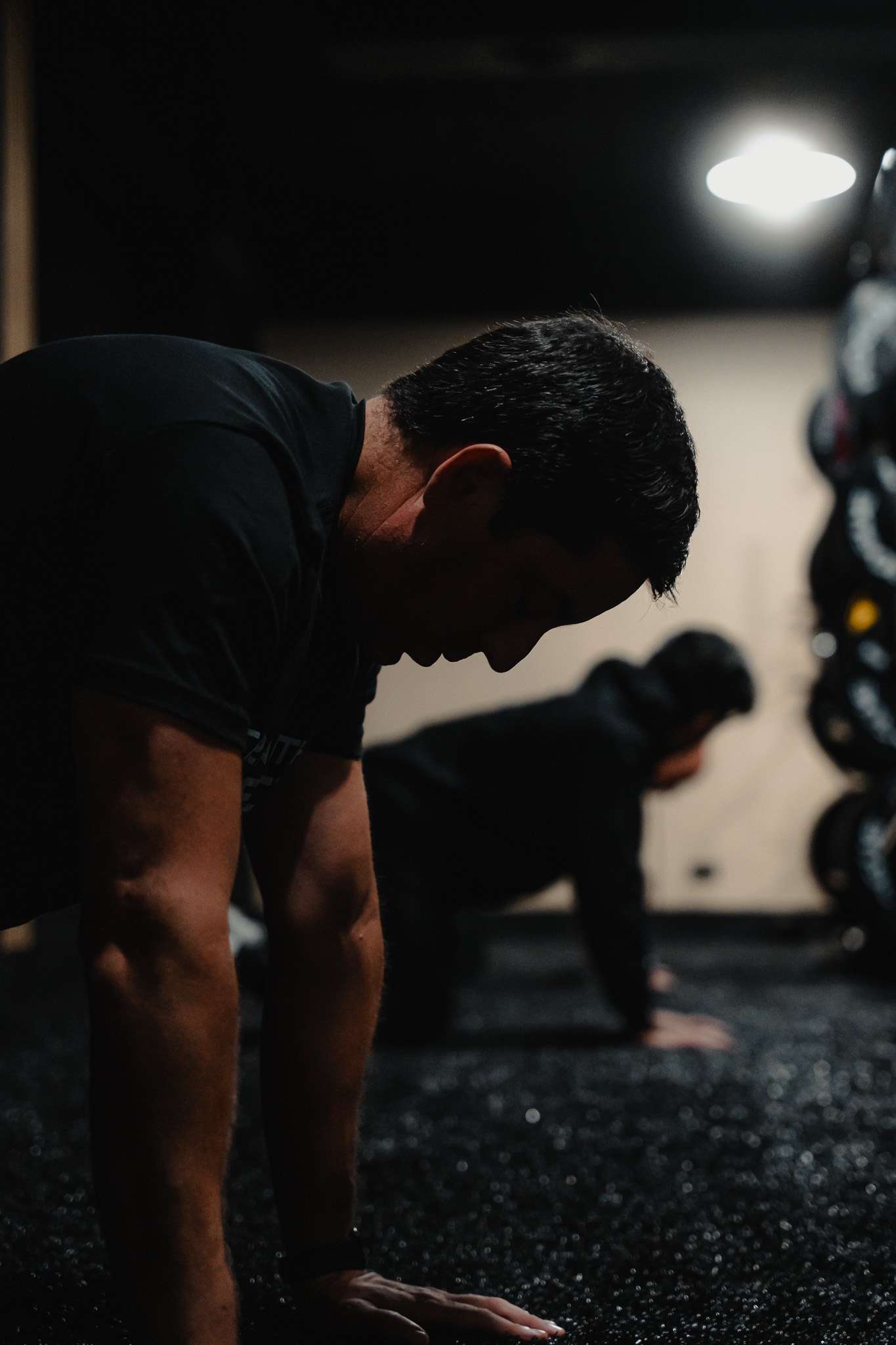
Why Movement Quality Comes Before Strength Training
Most people who start a training program make the same mistake: they go straight to lifting heavy before their body is ready to handle it.
The result is predictable — nagging pain, frustrating plateaus, and a body that feels worse instead of better. This isn't a motivation problem. It's a sequencing problem.
At Strength Affect, every client starts with movement — not weight. Here's why.
Loading a Broken Pattern Makes It Worse
If your hip doesn't rotate freely, your shoulder compensates on every press, or your ankle limits your squat — adding weight to those patterns doesn't fix them. It reinforces them.
Two people can follow the exact same program and get completely different results. One body distributes load efficiently. The other compensates on every rep, slowly building toward an injury that seems to "come out of nowhere."
The issue is never the exercise. It's the body's readiness to perform it.
What We Look for in a Movement Assessment
Before we write a single workout, every new client at Strength Affect goes through a full movement screen. We're not asking "what hurts" — we're looking at how your body actually moves through fundamental patterns: squatting, hinging, pushing, pulling, rotating.
We're identifying:
- Mobility restrictions — joints not moving through their full range
- Stability deficits — areas that move when they should be stable
- Left-to-right asymmetries
- Compensation patterns built around old injuries
We also use InBody body composition scanning and VALD force plate assessment to get objective data — not guesswork — before building your program.
When You Fix Movement First, Strength Follows Faster
A hip that's stiff isn't just uncomfortable. It's limiting how much force your glutes can produce. A restricted shoulder leaves power on the table on every press.
When joints move well and muscles fire in the right sequence, you can actually access the strength you're working to build. Most clients notice everyday activities getting easier within a few weeks — getting off the floor, carrying groceries, keeping up with their kids. That's the foundation taking hold. The strength gains follow — and they compound instead of plateau.
The Strength Affect Process
Our four-step process isn't random. It's a progression that builds on itself:
- Assess — Full movement screen, body composition scan, strength baseline
- Improve Movement — Address restrictions, build stability, correct compensations
- Build Strength — Progressive overload applied to a body that's ready for it
- Change Your Body — Composition shifts as a result of training that actually works
Most trainers skip from step one to step three. That's why so many people train hard and still don't get where they want to go.
This Matters Even More If You've Been Sitting All Day
If you're sitting at a desk 8 hours a day, you've developed real restrictions in your hips, thoracic spine, and shoulders — whether you feel them or not. If you're coming back from an injury, your nervous system has learned to protect that area, and it won't self-correct without intentional work. If you've been training through a knee that aches or a shoulder that clicks, that's a signal worth addressing — not ignoring.
In every case, the path to getting stronger runs directly through improving how you move first.
Move Well. Get Strong. That's the Order for a Reason.
Strength that doesn't transfer to how you feel in your body isn't really strength. At Strength Affect on Chicago's North Shore, every program starts with a thorough assessment that tells us exactly what your body needs — then we build from there.
Book your free intro session and find out what training built around you actually feels like.
Serving Northfield, Winnetka, Glencoe, Glenview, and Wilmette.


