What Is Strength Balance and Why Is It Important?
November 23, 2025
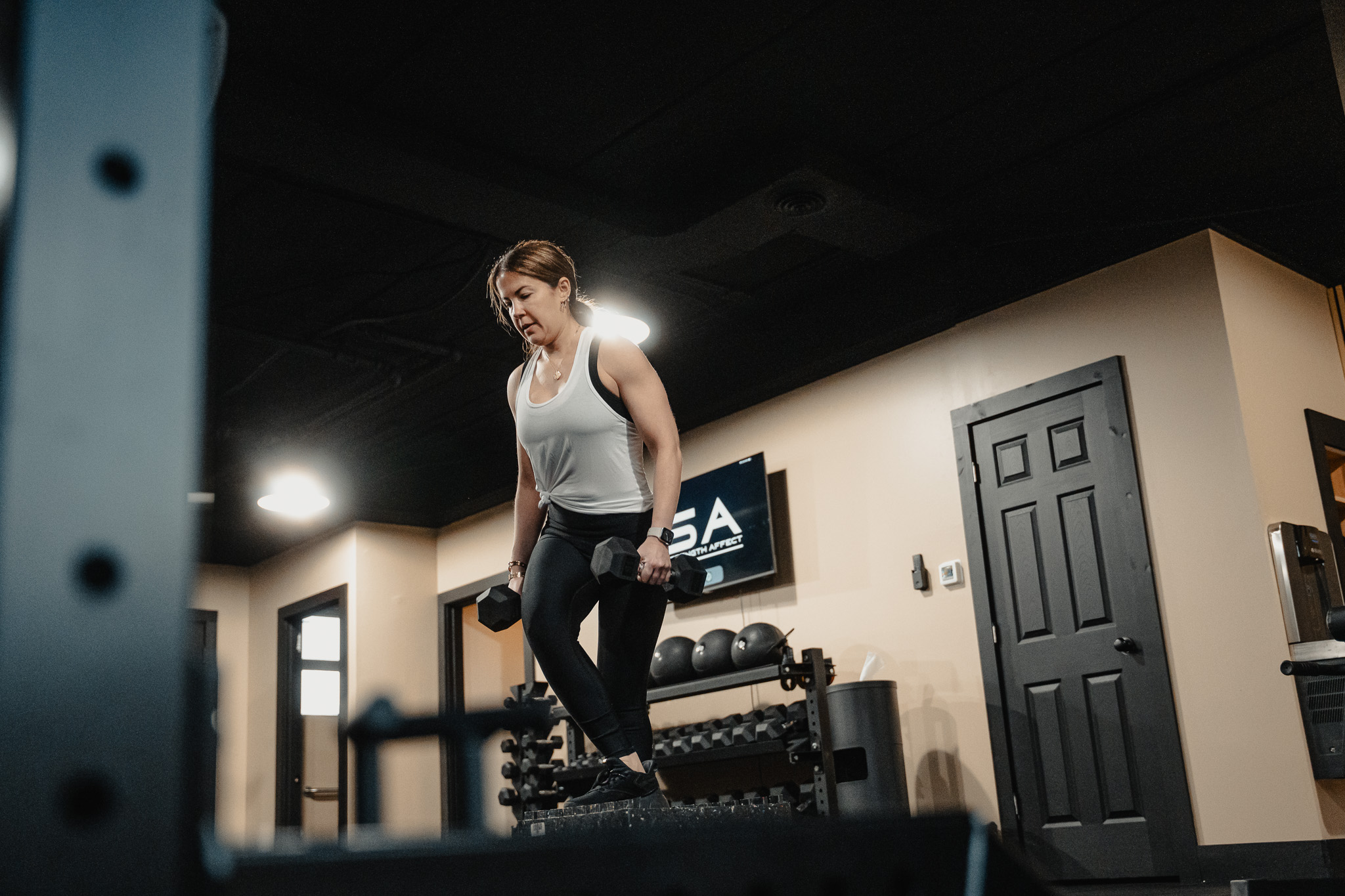
What Is Strength Balance — and Why Does It Matter?
You can work hard, follow a program, and still keep getting hurt or hitting walls that make no sense.
Most of the time the problem isn't effort. It's imbalance.
When one side of your body — or one muscle group — is significantly stronger than its opposite, your body compensates. Every rep. Every set. Every movement. And over time that compensation builds into pain, stalled progress, or an injury that feels like it came from nowhere.
That's what strength balance addresses. And it's one of the most overlooked pieces of long-term training.
What Strength Balance Means
Your body is built around pairs. Every muscle group has an opposite. Every movement has a counterpart.
Push vs. pull — your chest and shoulders vs. your back and biceps
Front vs. back — your quads vs. your hamstrings and glutes
Left vs. right — your dominant side vs. your weaker side
Top vs. bottom — upper body strength vs. lower body strength
When one side of any of these pairs is significantly stronger than the other, the weaker side gets overloaded on every rep. Joints compensate. Technique breaks down. And eventually something gives.
The frustrating part: the pain rarely shows up where the problem actually is.
A Quick Way to Know If You're Balanced
A useful benchmark used in performance training: opposing muscle groups should be within about 85% of each other.
If you can press 100 lbs, you should be able to row at least 85 lbs. If your right leg is significantly stronger than your left, that gap will show up eventually — in your knees, your hips, or your lower back.
Most people have never checked this. Most training programs never address it.
Where Imbalances Come From
Nobody develops imbalances on purpose. They build up over time through:
Dominant side habits — most people favor one side in daily life and training without realizing it. Over months and years the gap quietly grows.
Past injuries — your body protects an injured area by offloading stress elsewhere. Those compensation patterns don't self-correct when the injury heals. They stay.
Poorly structured programs — too much pressing, not enough pulling. Too much quad work, not enough posterior chain. The stronger side keeps getting stronger. The weaker side falls further behind.
The problem isn't that the imbalance exists. The problem is loading it with more weight before fixing it.
How We Find and Fix It at Strength Affect
Assess with force plates. We use VALD force plate technology to measure right-to-left strength, power output, and how evenly your body distributes load. Objective data — not guesswork — on exactly where your gaps are.
Train the weak side directly. Your program targets the imbalances specifically. Single-leg work, single-arm work, anti-rotation training — exercises that force the weaker side to carry its share without the stronger side compensating.
Track and close the gap. We retest regularly to measure progress. As balance improves we layer in heavier compound lifts and higher volumes. You get stronger across the board — not just on your good side.
What Changes When You Fix It
Most clients notice three things when imbalances get corrected:
Their technique cleans up without being coached on it. Weights they've been stuck on for months start moving again. And pain they'd accepted as just part of training starts to go away.
That's not coincidence. That's what happens when you stop loading a system that has a weak link in it.
The Bottom Line
The problem is never where the pain is. It's where the weakness is.
Strength balance is how we make sure the training you're doing is building your whole body — not just making your stronger side stronger.
Book your free intro session and find out exactly where your gaps are.
Serving Northfield, Winnetka, Glencoe, Glenview, and Wilmette.


