What to Expect at Your Free Assessment at Strength Affect
April 6, 2026
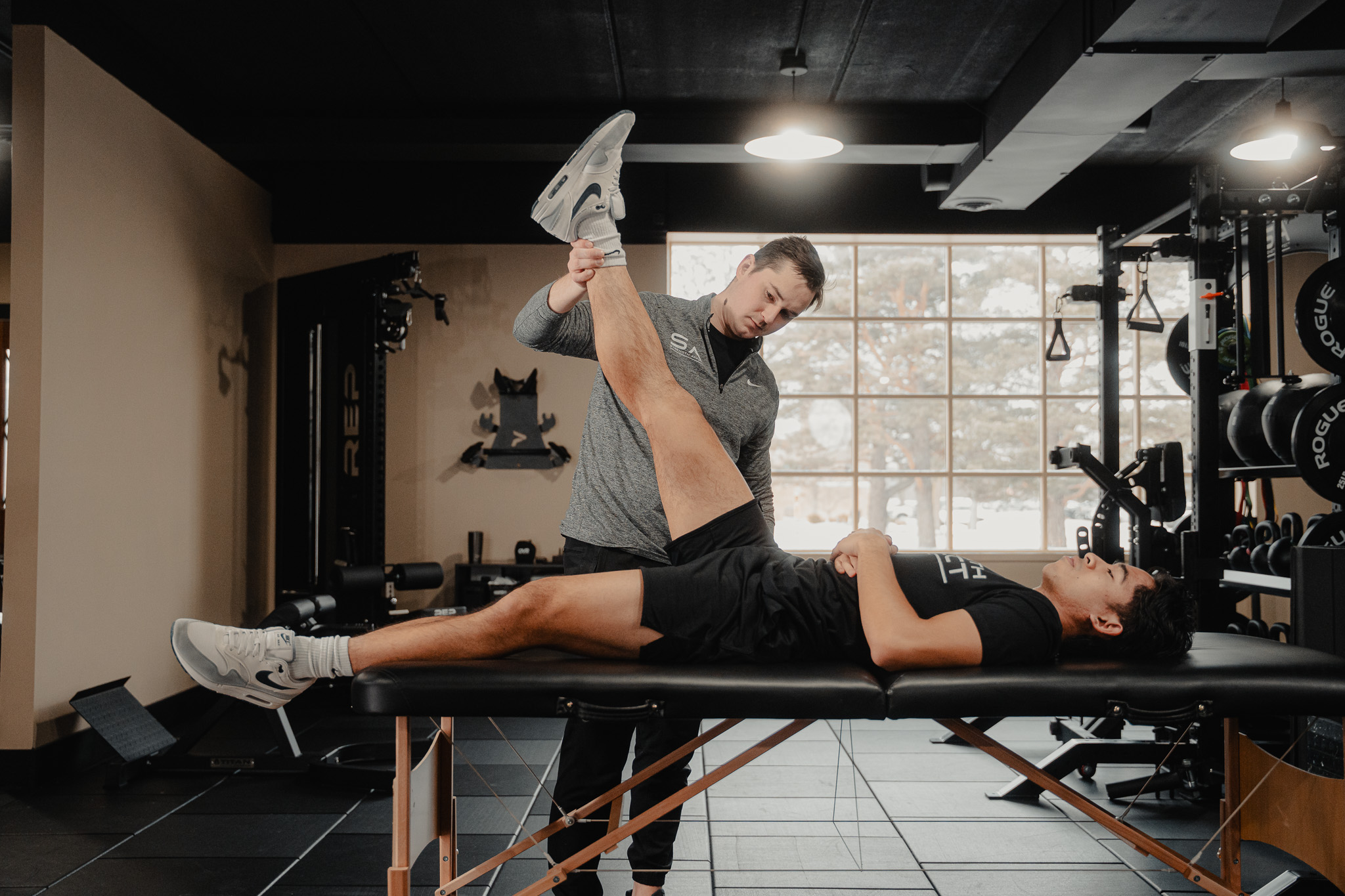
What to Expect at Your Free Assessment at Strength Affect
The free assessment at Strength Affect is a roughly 60-minute assessment built around three parts: a conversation about your background and goals, an InBody body composition scan, and a full movement assessment. There's nothing to prepare, no fitness experience required, and nothing to prove. You leave knowing exactly where you stand — with real numbers, not guesses.
That's the whole idea. Before we recommend anything, we assess. It's the first step of our system — Assess, Prescribe, Track, and Progress — and it's why the free assessment at our Northfield studio looks nothing like a sales pitch with a clipboard. Here's exactly what happens, in order, from the moment you walk in.
Part 1: What do we talk about first?
Your free assessment starts with a conversation, not a test. You'll sit down with a coach and get to know each other. We'll talk through your training history, what your weeks actually look like, and what you want your body to be able to do — whether that's carrying grandkids up the stairs, skiing without a second thought, or simply getting stronger every year instead of weaker. We'll also ask what you want to get out of the free assessment itself, so the hour is spent answering your questions, not running through a script.
This part matters more than most people expect. Two adults with the same age and the same body can need completely different starting points depending on what's happened over the last twenty years. A desk job since 2015, a back that "acts up sometimes" — all of it shapes what we do next. Be honest here. We're not judging; we're gathering information.
Part 2: What does the InBody scan tell you?
The InBody scan takes about a minute. You stand on the device, hold the handles, and it measures what a bathroom scale can't: your body fat, your muscle mass, and your hydration. Just as important, it puts each of those numbers in context — showing you where you sit relative to healthy and unhealthy ranges, not just spitting out a figure and leaving you to guess what it means.
The scan also flags visceral fat — the fat stored around your organs — which is one of the most important health markers most people have never had measured. For adults 40 and up, this picture matters more than body weight ever will. Muscle protects your metabolism, your joints, and your independence as you age, and it's the thing most people quietly lose each decade without noticing. The InBody gives us your baseline, and it's one of the measurements we revisit at every quarterly Strength Review, so progress becomes something you can see in data — not just something you feel. If you're curious about the assessment tools themselves, we've written a full breakdown in The Tools We Use at Strength Affect.
Part 3: What does the movement assessment look for?
This is where we test how you move — and, more importantly, why you move that way. The movement assessment looks at global patterns like squatting and reaching, then goes deeper with individual joint tests and stability tests to build a complete picture of how your body works. It's also where we dig into your injury history, because how you move today usually has a story behind it.
Here's what separates this from a quick eyeball screen: we don't just look at how you move, we look at why. A limitation can come from a postural bias, from restricted range of motion — and that restriction can live in the joint itself or in the surrounding tissue — or from a lack of stability that's quietly changing how you do everything. Each of those causes calls for a different fix, so knowing the "why" is what makes the prescription accurate.
The movement assessment also tells us exactly where you're starting. It shows us whether you're safely ready for strength training right away, or whether there are weaknesses or risk factors — like a weak core — that need to be addressed first. Either answer is a good answer. A great exercise may not be great for you — yet. That depends on your injury history, your movement patterns, and your training experience, and this is how coaching works at Strength Affect: every movement can be matched to where you actually are, with measured standards that guide what you're ready for next.
What if I haven't trained in years — or ever?
Then you're exactly who this was built for. Most people who walk into Strength Affect for the first time are not "gym people." Many haven't trained seriously in a decade, or ever. That's not a barrier; it's the normal starting point.
A few things to put your mind at ease:
- No fitness experience required. The entire hour is scaled to you. There is no baseline you need to meet before you're allowed to be assessed.
- Nothing to prepare. Don't train extra beforehand, don't diet for the scan, don't stretch for a week. We want an accurate picture of where you are right now.
- Dress comfortably. Athletic clothes you can move in and comfortable shoes. That's it.
- Nerves are normal. Walking into a strength studio after years away takes some courage. You'll be with one coach, in a controlled environment, doing manageable things. Most people tell us the hour flew by.
What happens after the free assessment?
You get answers, on the spot. Your coach will walk you through everything the assessment found — what's moving well, what needs attention, where your body composition sits — and translate it into a clear recommendation.
For most new clients, that recommendation is the First 21 Days, a structured starting block where you learn our 5-block session structure — Movement Prep, Power Series, Strength Block, Accessory Block, Finisher — build the foundational patterns, and feel the difference in 21 days. From there, you'll continue in Personal Training or move into Small Group Training, which is capped at four people and requires hitting movement standards before joining, so every group session runs at a real coaching level.
If you're on the North Shore — Northfield, Winnetka, Glencoe, Wilmette, Kenilworth, Glenview, or Northbrook — and you're ready to find out exactly where you stand, the next step is one hour and costs nothing. Book your free assessment.


